August 12, 2026
IBIT vs Buying Bitcoin: Why I Hold the ETF in My Brokerage Account
A spot Bitcoin ETF gives up the keys and the 24/7 market. In exchange: SIPC coverage, margin collateral, IRA eligibility. Here is the honest trade.
Related profiles: IBIT , FBTC , BTCI , YBIT
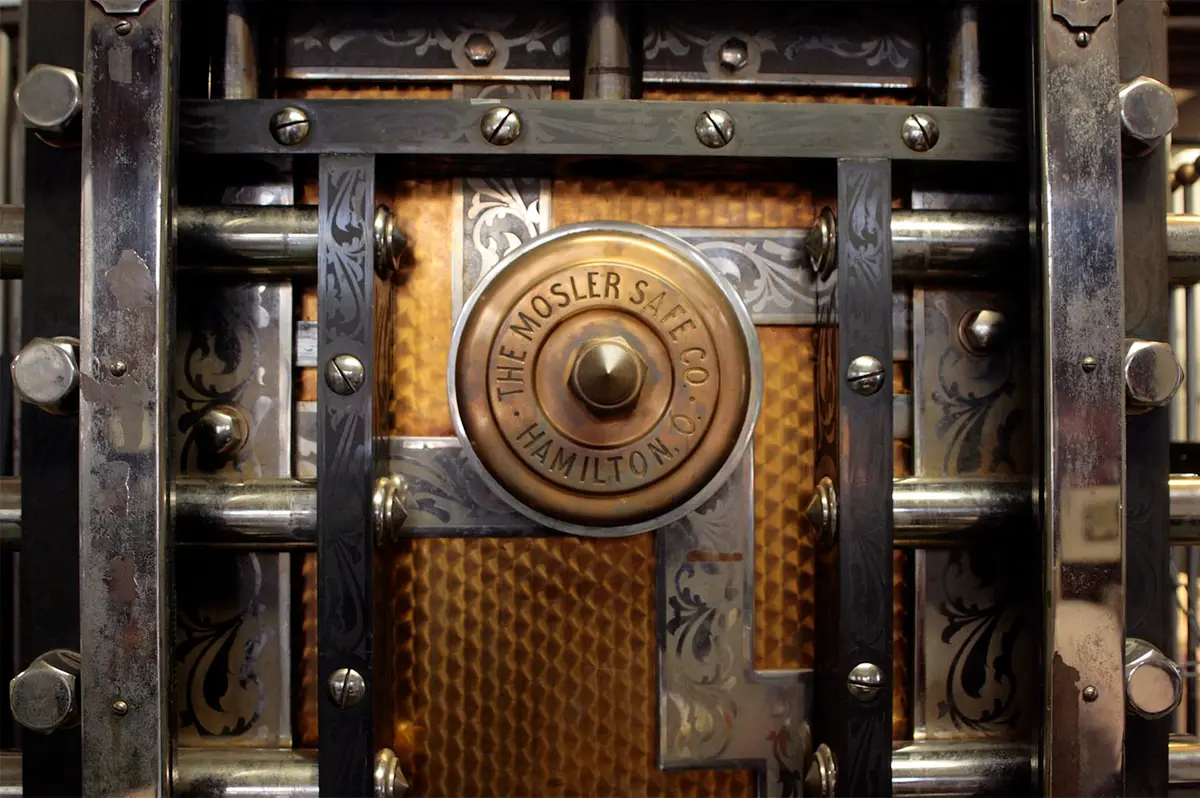
I hold my bitcoin exposure through IBIT rather than coins in a wallet, and I want to walk through why, because the reasoning is probably not what you would expect. It has very little to do with what bitcoin is, and almost everything to do with where the position sits.
IBIT lives in my brokerage account alongside everything else I own. That one detail gives me three advantages that self-custody simply cannot offer, and it costs me three things that I think are worth being upfront about.
| IBIT (spot ETF) | Bitcoin (direct) | |
|---|---|---|
| Where it sits | Brokerage account | Wallet or crypto exchange |
| SIPC coverage | Yes, up to $500,000 | No |
| Usable as margin collateral | Yes, subject to broker rules | No at Robinhood and most brokers |
| IRA eligible | Yes, any standard IRA | Only via a specialty crypto IRA |
| Ongoing cost | 0.25% sponsor fee | None ongoing |
| Trading hours | U.S. market hours | 24/7 |
| Wash sale rule | Applies as brokers report it | Does not currently apply |
| Can be irrecoverably lost | No | Yes |
Reason one: it cannot be lost
People tend to wave this one off as a beginner’s worry, and I do not think that is fair.
Chainalysis estimates that somewhere between 2.3 million and 3.7 million bitcoin are permanently lost, which works out to roughly 11 to 18 percent of the 21 million cap. That figure is not about theft. Those are coins that were simply misplaced, through dead hard drives, forgotten passphrases, and early miners who died without telling anyone where the keys were. The range is wide because the methodology has to make assumptions about intent, but even at the low end it represents more coins than any single holder on earth controls.
Theft is a separate number, and it is growing. Chainalysis recorded roughly $3.4 billion in crypto stolen during 2025, and the $1.5 billion Bybit breach accounted for a large share of that in a single February incident. What I find more telling is where those losses have shifted. Personal wallet compromises grew from about 7 percent of total stolen value in 2022 to roughly 44 percent in 2024. Self-custody did not remove counterparty risk so much as move the attack surface onto individuals, most of whom are not running enterprise-grade security.
When I hold IBIT, neither of those failure modes is available to me. There is no seed phrase to lose, no clipboard-hijacking malware waiting on a send address, and no open question about whether the hardware wallet in the fireproof bag actually survives a house fire. If someone compromises my brokerage login, the shares are still registered to my account, and the broker has a real fraud process with a real phone number behind it.
There is also the coverage question. IBIT shares are securities, so they fall under SIPC protection up to $500,000, including a $250,000 cash sublimit. Crypto held at Robinhood Crypto is not SIPC protected, and Robinhood Crypto is not a FINRA or SIPC member. Robinhood does carry private crime insurance underwritten through Lloyd’s syndicates covering a portion of stored assets, but that is a genuinely different thing from statutory investor protection.
I should be honest about two limits here. SIPC covers your broker failing, not your investment falling, so if bitcoin drops 60 percent, SIPC does nothing for you. And IBIT’s bitcoin is custodied at Coinbase Custody Trust Company, with Anchorage Digital Bank as an additional approved custodian, so custody risk has not disappeared. It has been handed to a regulated fiduciary that holds the assets in segregated accounts under an audited fund structure. Personally, I would rather that entity hold the keys than me.
Reason two: it is collateral, and bitcoin is not
This is the piece most comparisons leave out entirely, and it is the reason I stopped splitting the position between the two.
Robinhood states the rule plainly in their own support documentation: crypto is non-marginable and cannot count as collateral. Crypto holdings are not factored into margin calls, because they are not securities and they sit with the separate Robinhood Crypto entity. You could have six figures of bitcoin in the app and it would contribute nothing at all to your borrowing power.
IBIT works differently, because it is an exchange-listed security. Under Regulation T you can borrow up to 50 percent of a marginable position’s value, and IBIT sits in the same margin account as your stocks and ETFs, feeding into the same equity number. On a $50,000 IBIT position, that is up to $25,000 of borrowing capacity. Robinhood’s tiered rates start at 5 percent on balances up to $50,000 as of mid-2026 and step down from there, Interactive Brokers publishes lower rates, and the rate floats with the fed funds target.
There are two things worth keeping in mind alongside that, though. The first is that being able to buy IBIT at a given broker is not the same as being able to borrow against it there. Brokers set house maintenance requirements above the regulatory minimum on volatile products, they rarely publish those numbers for crypto ETFs, and they can change them without giving you advance notice. It is worth verifying how your broker actually treats IBIT before you build a plan around it.
The second is that borrowing against an asset capable of a 60 percent drawdown is a reliable way to get liquidated at the worst possible moment. A margin call on IBIT can force a sale without notice, and your loss is not capped at the collateral. Our margin and borrowing notes cover the sequencing risk in more detail. My point is that the option exists at all, not that you should use all of it. The comparison I care about is having a lever versus not having one.
On the direct-bitcoin side, the equivalent is a crypto-backed loan from a dedicated lender. Those are available, and some of them offer higher loan-to-value ratios, but published rates in that market commonly run from the mid-single digits into the high teens, and you are taking on credit risk with a lender rather than borrowing inside a regulated brokerage account.
Reason three: one account, one tax form, one IRA
Because IBIT is an ETF, it goes anywhere an ETF goes, whether that is a traditional IRA, a Roth IRA, or most 401(k) brokerage windows. Holding actual bitcoin in a retirement account means setting up a self-directed crypto IRA with its own custodian, its own fee schedule, and its own paperwork. If you want bitcoin exposure in tax-advantaged space, that consideration alone often settles the question.
The tax reporting is pleasantly boring as well. IBIT trades show up on a 1099-B alongside everything else in the account. Direct crypto reporting has improved quite a bit, but it still frequently involves reconciling exchange exports and cost basis across platforms.
And the position appears in the same portfolio view as the rest of what I own, which matters more than you might expect. If you cannot see an allocation next to your other allocations, you are likely to size it badly.
What I am giving up
Here is what the wrapper actually costs me.
The fee. IBIT charges 0.25 percent annually, which the trust deducts by selling bitcoin, so the share-to-bitcoin ratio declines slowly over time. On a $50,000 position that comes to about $125 a year. Self-custody has no ongoing fee at all, and over a long holding period this is the largest cost of the wrapper that you can actually put a number on.
The keys. I cannot send IBIT to anyone, spend it, or move it off-platform. If your reason for owning bitcoin is censorship resistance, or hedging against the financial system itself, then the ETF does not deliver that. What it delivers is price exposure sitting inside the system you were trying to hedge against. That is a perfectly legitimate reason to hold coins directly, and I would not try to talk you out of it.
Market hours and the wash sale rule. Bitcoin trades continuously, while IBIT trades only when U.S. exchanges are open, so a weekend crash is something you watch rather than something you can act on. On the tax side, brokers report spot Bitcoin ETF trades as securities on Form 1099-B, so wash sale adjustments generally apply, whereas direct crypto is treated as property and is not currently subject to the rule. If tax-loss harvesting is central to how you run the position, direct ownership clearly wins that comparison.
Where the income angle comes in
IBIT pays nothing at all. It holds bitcoin, and bitcoin does not distribute cash. So if you came here for monthly income, IBIT belongs in a growth sleeve rather than an income sleeve.
The funds that do turn bitcoin exposure into a payout get there by selling options: BTCI from NEOS, YBIT from YieldMax, and BlackRock’s own BITA, which launched in June 2026 targeting a 15 to 25 percent annual yield while aiming to keep at least 70 percent of bitcoin’s price appreciation. The distribution rates look extraordinary, and they come from the same trade every covered-call fund makes, which is selling upside in exchange for premium.
Bitcoin income funds have also been among the least stable payers in the category. Two of them turned up in our review of income ETF distribution cuts in mid-2026, with BITO down 53.7 percent and MAXI down 37.6 percent from prior levels. Option premium scales with volatility, so a fund whose payout depends on bitcoin staying wild will pay less when bitcoin calms down. I would suggest checking the live grades and dividend histories rather than trusting the headline yield.
My own arrangement is straightforward: IBIT for the exposure, and income funds elsewhere in the portfolio where the underlying is less volatile.
How to decide
- Start with your actual thesis. If what you want is bitcoin as a permissionless bearer asset outside the banking system, then buy bitcoin and learn custody properly, because the ETF cannot do that job. If what you want is price exposure as one holding in a diversified portfolio, the wrapper is doing real work for you.
- Check whether your account type decides it for you. If the money is going into an IRA or 401(k), the ETF is usually the only practical route.
- Confirm margin treatment with your specific broker. Please do not assume IBIT is marginable at a given house requirement until someone at the firm confirms it, and even then, treat that capacity as an option you rarely reach for.
- Weigh the fee against the failure modes. That 0.25 percent a year is what you pay to never be the reason your bitcoin disappears. Whether it strikes you as expensive or cheap depends on your situation rather than on the abstract math.
- Do not mistake IBIT for income. It pays nothing. If you need cash flow, that is a separate allocation decision, and we cover it in what is income investing and building a 40/30/30 income portfolio.
Plenty of thoughtful people hold both, keeping a long-horizon core in self-custody that they never intend to touch, and holding the rest in the brokerage account where it can be borrowed against and kept in tax-advantaged space. That is a perfectly coherent answer as well.
Open live profiles: IBIT · FBTC · BTCI · YBIT
Educational only, not investment advice. Margin borrowing carries risk of forced liquidation and losses exceeding your collateral. Confirm broker margin policies, SIPC coverage details, and any tax treatment with the relevant firm and a qualified advisor.
Frequently asked questions
Is IBIT the same as owning bitcoin?
Economically it is close, but legally it is not. IBIT is a grantor trust that holds bitcoin with an institutional custodian, so you own shares of the trust rather than coins on the blockchain. You get the price exposure minus the 0.25 percent annual sponsor fee. What you do not get is private keys, the ability to send bitcoin to another person, or access to the market outside U.S. exchange hours.
Can you borrow on margin against IBIT?
At most brokers that offer margin, yes. IBIT is an exchange-listed security, so it falls under Regulation T, which permits borrowing up to 50 percent of a position's value. Direct bitcoin at Robinhood does not work this way. Robinhood's own support documentation states that crypto is non-marginable and cannot count as collateral, because it is held with a separate affiliate and is not a security. Keep in mind that brokers can and do set higher house maintenance requirements on volatile ETFs without publishing them, so it is worth confirming how your broker treats IBIT before you plan around it.
Is IBIT protected by SIPC?
IBIT shares held in a brokerage account are securities, so they fall under SIPC coverage, which protects up to 500,000 dollars in securities including a 250,000 dollar cash sublimit. Cryptocurrency held at a crypto affiliate like Robinhood Crypto is not SIPC protected. One important limit is that SIPC covers the failure of your broker, not a decline in the price of what you own. If bitcoin drops 60 percent, SIPC does nothing for you.
Can I hold IBIT in an IRA or Roth IRA?
Yes. IBIT trades like any other ETF, so you can buy it inside a traditional IRA, Roth IRA, or 401(k) that allows ETF purchases, with no special custodian required. Holding bitcoin directly in a retirement account means setting up a specialized self-directed crypto IRA with its own fee structure. This is one of the larger practical advantages of the ETF wrapper.
Does the wash sale rule apply to IBIT?
In practice, usually yes, and this one cuts against the ETF. Direct cryptocurrency is treated as property by the IRS and is not currently subject to the wash sale rule, so a loss can be harvested and the position rebought immediately. Most brokers report spot Bitcoin ETF trades on Form 1099-B with wash sale adjustments applied. If active tax-loss harvesting is central to your strategy, holding the coin directly is the stronger position. Please confirm the details with a tax professional.
Does IBIT pay a dividend?
No. IBIT holds bitcoin and pays no distribution, so it produces no income on its own. Investors who want cash flow from bitcoin exposure tend to use covered-call funds such as BTCI, YBIT, or BlackRock's BITA instead, which sell options against bitcoin exposure and pay out the premium. Those funds trade away part of bitcoin's upside in exchange for that payout.
Disclaimer
Numbers on this site are for research and educational use only - not individualized investment advice or a recommendation to buy or sell securities. ETFs involve risk including possible loss of principal. Past yield and performance do not predict future results. Yield to Freedom (YTF) grades are illustrative and subjective; verify all data independently.